2026 Toyota RAV4 Review: Price, MPG, Hybrid Specs, Interior, Pros & Cons
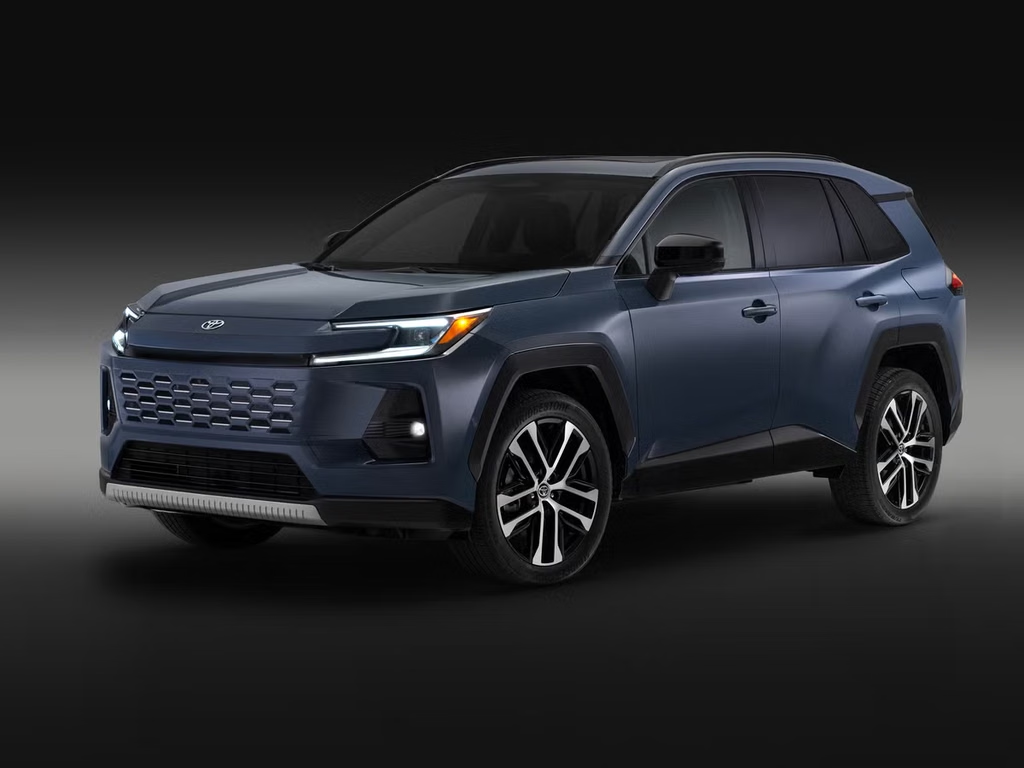
The Toyota RAV4 has long been one of the most important compact SUVs in the United States, combining everyday practicality, relatively low fuel consumption, useful cargo space, and available all-wheel drive.
For 2026, Toyota has made one of the biggest changes in the RAV4’s history.
The new RAV4 enters its sixth generation with a complete redesign, and the U.S. lineup is now fully electrified. Instead of offering a traditional gasoline-only version, buyers can choose between Hybrid Electric Vehicle and Plug-in Hybrid Electric Vehicle powertrains.
Toyota also introduces a new exterior design, a fifth-generation hybrid system, Toyota Safety Sense 4.0, updated multimedia technology, new Woodland and GR SPORT versions, and significantly improved plug-in hybrid performance.
In this 2026 Toyota RAV4 review, we examine pricing, trims, horsepower, fuel economy, electric range, towing capacity, interior technology, safety features, practicality, pros and cons, and whether the redesigned RAV4 is worth buying.
2026 Toyota RAV4 Overview
The 2026 RAV4 is a compact five-passenger SUV designed to compete with vehicles such as the Honda CR-V, Hyundai Tucson, Subaru Forester, Mazda CX-5 and CX-50, Nissan Rogue, Ford Escape, and Chevrolet Equinox.
Toyota completely redesigned the RAV4 for 2026 while continuing to use its TNGA-K vehicle architecture.
The updated structure receives additional reinforcement around frame joints and suspension mounting points, while Toyota says high-damping adhesive is used to help reduce vibrations and road noise.
More importantly, every 2026 RAV4 sold in the United States uses some form of electrified powertrain.
Buyers can choose between:
- Hybrid Electric Vehicle
- Plug-in Hybrid Electric Vehicle
Regular hybrid versions are available with front-wheel drive or electronic all-wheel drive depending on trim.
Plug-in hybrid models use all-wheel drive as standard.
Toyota divides the redesigned RAV4 into three styling personalities: Core, Rugged, and Sport.
The regular hybrid lineup includes:
- LE
- SE
- XLE Premium
- Woodland
- XSE
- Limited
Plug-in hybrid availability expands to include SE, Woodland, XSE, and the performance-oriented GR SPORT.
2026 Toyota RAV4 Price
The regular 2026 RAV4 Hybrid begins at $31,900 MSRP for the LE before destination charges and optional equipment.
Current Toyota pricing for the hybrid lineup includes:
RAV4 LE — $31,900
The LE is the entry-level RAV4 but comes with significantly more technology than basic compact SUVs of the past.
Standard equipment includes a 12.3-inch digital gauge cluster, 10.5-inch Toyota Audio Multimedia touchscreen, wireless Apple CarPlay and Android Auto compatibility, and Toyota Safety Sense 4.0.
RAV4 SE — $34,700
The SE introduces a sportier appearance.
It includes 18-inch black alloy wheels, exterior sport styling, and blue interior stitching.
It is aimed at buyers who want something more aggressive-looking than the regular LE without moving to the expensive XSE.
RAV4 XLE Premium — $36,100
The XLE Premium adds comfort and convenience equipment.
Notable features include SofTex-trimmed seating, heated front seats, a power liftgate, and parking-assistance technology.
RAV4 Woodland — $39,900
The Woodland focuses on outdoor and light off-road use.
It comes with all-wheel drive, 18-inch wheels with all-terrain tires, raised roof rails with crossbars, additional ground clearance, and Rigid Industries LED fog lights.
RAV4 XSE — $41,300
The XSE mixes the RAV4’s practical SUV design with a more premium and sporty interior.
It includes 20-inch black alloy wheels, heated and ventilated front seats, and a larger 12.9-inch multimedia touchscreen.
RAV4 Limited — $43,300
The Limited sits at the luxury end of the regular hybrid lineup.
Equipment includes features such as a panoramic glass roof, JBL premium audio, dual wireless phone chargers, and additional convenience and driver-assistance technology.
Toyota’s current U.S. listings therefore place the standard hybrid lineup between roughly $31,900 and $43,300 before destination, options, taxes, and dealer charges.
2026 Toyota RAV4 Plug-in Hybrid Price
The plug-in hybrid versions cost considerably more but provide additional performance and the ability to drive significant distances using electricity alone.
Toyota currently lists starting MSRPs of approximately:
- RAV4 PHEV SE — $41,500
- RAV4 PHEV Woodland — $45,300
- RAV4 PHEV XSE — $47,200
- RAV4 PHEV GR SPORT — $48,500
Actual transaction prices can vary depending on destination charges, options, dealer pricing, incentives, and location.
2026 RAV4 Hybrid Engine and Horsepower
The regular 2026 RAV4 Hybrid uses Toyota’s fifth-generation hybrid system.
At its center is a 2.5-liter four-cylinder gasoline engine working together with electric motors and a lithium-ion traction battery.
Front-wheel-drive models produce:
226 combined horsepower
All-wheel-drive models increase output to:
236 combined horsepower
The AWD system uses a dedicated electric motor for the rear wheels rather than a traditional mechanical driveshaft connecting the front and rear axles.
This allows Toyota to provide additional traction without significantly complicating the hybrid powertrain.
The new system represents an increase in output compared with the previous-generation RAV4 Hybrid.
Front-Wheel Drive Returns to the RAV4 Hybrid
One interesting change for 2026 is the availability of front-wheel drive with the RAV4 Hybrid.
Previously, American RAV4 Hybrid buyers were largely associated with AWD configurations.
For 2026, Toyota offers FWD on selected trims including the LE, SE, and XLE Premium.
This can benefit drivers living in areas where all-wheel drive is not necessary.
Removing the rear drive motor can reduce complexity and also contributes to excellent fuel-economy figures.
Drivers living in snowy regions, traveling frequently on dirt roads, or simply wanting additional traction can still choose electronic AWD.
2026 Toyota RAV4 Fuel Economy
Fuel economy is one of the strongest reasons to consider the new RAV4.
Toyota’s current estimates vary according to trim and drivetrain.
The most efficient front-wheel-drive versions are rated at approximately:
47 mpg city
40 mpg highway
Toyota lists combined estimates around the low-to-mid 40 mpg range depending on configuration.
AWD models remain efficient but their ratings vary by trim.
For example, Toyota lists:
- LE and SE AWD — around 45 city / 39 highway
- XLE Premium AWD — around 45 city / 38 highway
- Woodland — around 41 city / 35 highway
- XSE and Limited — approximately 43 city / 37 highway in Toyota’s current consumer listings
These figures make the RAV4 particularly attractive for commuters and families who want SUV practicality without traditional SUV fuel consumption.
Actual fuel economy will depend on traffic, climate, speed, driving style, tire choice, cargo, and other conditions.
2026 RAV4 Plug-in Hybrid Performance
Drivers wanting considerably more power can choose the new RAV4 Plug-in Hybrid.
The latest system combines a 2.5-liter gasoline engine with a larger traction battery and more powerful electric motors.
Toyota rates the production 2026 system at:
324 net combined horsepower
That makes the PHEV considerably more powerful than the regular 226- or 236-horsepower hybrid.
All plug-in hybrid models also include all-wheel drive.
This combination gives the RAV4 PHEV an interesting position in the compact SUV segment.
It can behave like an electric vehicle for many short daily trips while still providing gasoline-powered long-distance capability when charging is unavailable.
2026 RAV4 Plug-in Hybrid Electric Range
One of the biggest improvements for 2026 is electric driving range.
Toyota estimates up to 52 miles of all-electric driving range on a full charge for certain RAV4 PHEV versions.
Current manufacturer estimates include approximately:
- SE PHEV — up to 52 miles
- XSE PHEV — up to 52 miles
- Woodland PHEV — around 49 miles
- GR SPORT PHEV — around 48 miles
For someone whose daily commute is 20 or 30 miles, this creates the possibility of completing much of normal weekday driving without starting the gasoline engine, assuming the vehicle is regularly charged.
Once the usable battery charge is depleted, the RAV4 continues operating as a gasoline-electric hybrid rather than simply stopping like a fully electric vehicle.
RAV4 PHEV Charging
Toyota has also improved charging capabilities.
Certain PHEV trims support higher-speed charging equipment.
The SE uses a 7-kW onboard AC charger, while selected higher trims can support more powerful AC charging.
Toyota also provides DC fast-charging capability on certain configurations, including the XSE and Woodland.
Toyota has stated that compatible versions can charge from approximately 10% to 80% in around 30 minutes under suitable conditions.
Actual charging times depend on charger output, battery temperature, ambient temperature, battery state of charge, and other conditions.
This makes the redesigned PHEV more flexible than many traditional plug-in hybrids that rely entirely on slower AC charging.
2026 Toyota RAV4 Towing Capacity
The RAV4 is not a heavy-duty towing vehicle, but Toyota has significantly improved capability on selected configurations.
Properly equipped AWD versions can tow up to:
3,500 pounds
This rating applies to several AWD hybrid and plug-in hybrid trims.
Toyota lists up to 3,500 pounds for configurations including AWD SE, XLE Premium, Woodland, XSE and Limited, as well as selected PHEV versions.
Front-wheel-drive models and certain entry-level AWD configurations are rated closer to:
1,750 pounds
A 3,500-pound rating can be enough for certain small campers, utility trailers, personal watercraft, or lightweight recreational trailers.
Owners should always check the exact rating of their individual vehicle and account for passengers, cargo, trailer tongue weight, and accessories before towing.
Woodland: The Adventure-Focused RAV4
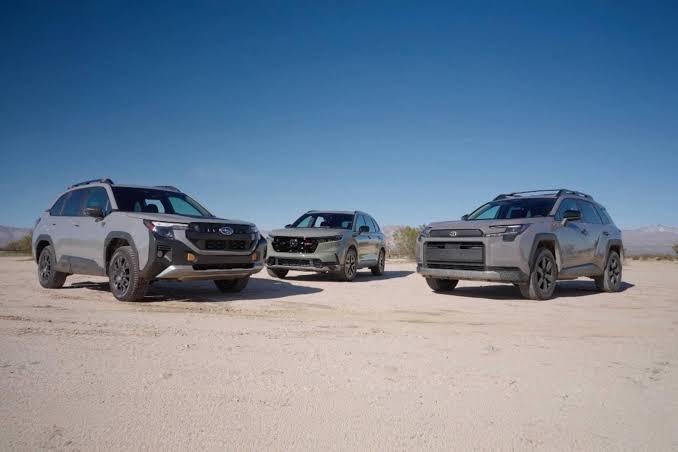
The Woodland is the most outdoors-oriented version of the mainstream RAV4 lineup.
Unlike simply applying different wheels and badges, Toyota gives the Woodland hardware intended to increase real-world utility.
Features include:
- Standard AWD
- All-terrain tires
- Approximately 8.5 inches of ground clearance
- Raised roof rails with crossbars
- LED fog lights
- 2-inch tow hitch receiver
- Up to 3,500 pounds of towing capacity
- Available hybrid or plug-in hybrid powertrain
The Woodland also includes an available 120-volt, 1,500-watt AC outlet in the cargo area on certain configurations.
That can be useful for camping equipment and other outdoor electronics.
The Woodland does not turn the RAV4 into a Toyota 4Runner or Land Cruiser, but it provides useful additional capability for buyers who spend time on gravel roads, campsites, trails, or outdoor adventures.
First-Ever RAV4 GR SPORT
One of the most interesting additions for 2026 is the RAV4 GR SPORT.
Toyota developed the model with input from its GAZOO Racing division.
Unlike a normal appearance package, the GR SPORT receives mechanical changes intended to improve handling.
Toyota lists features including:
- Plug-in hybrid powertrain
- Standard AWD
- 324 combined horsepower
- GR-tuned suspension
- GR-specific power steering calibration
- Increased body rigidity
- 20-inch wheels
- Performance-oriented summer tires
- More aggressive exterior styling
The GR SPORT is therefore aimed at buyers who want something sportier than a conventional family crossover but still need five seats and practical cargo space.
It is not intended to compete directly with dedicated sports cars, but it brings a new performance personality to the RAV4 range.
2026 Toyota RAV4 Interior
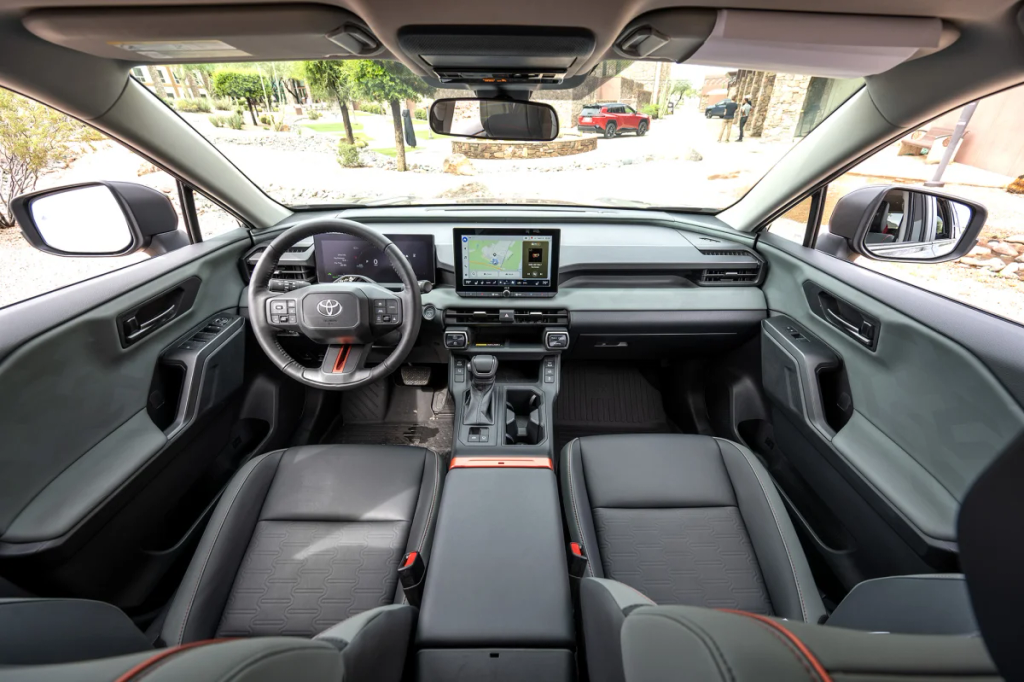
Toyota redesigned the cabin along with the exterior.
The RAV4 remains a five-passenger compact SUV, which means it is designed around everyday family usability rather than attempting to squeeze in a third seating row.
Toyota’s layout emphasizes physical practicality while incorporating significantly more digital technology.
Every model receives a 12.3-inch digital gauge cluster.
Entry-level models use a 10.5-inch multimedia touchscreen, while higher trims can receive a larger 12.9-inch display.
Wireless Apple CarPlay and Android Auto compatibility are standard.
Toyota’s new multimedia software also introduces improved voice controls, a customizable home screen, and integrated climate controls.
The RAV4 is Toyota’s first vehicle to launch this new generation of the multimedia system with onboard 5G connectivity.
Cargo Space and Practicality
Practicality remains one of the RAV4’s main strengths.
Toyota lists approximately 37.8 cubic feet of cargo capacity in current 2026 specifications.
That provides enough space for grocery runs, luggage, sports equipment, strollers, camping gear, and many other everyday loads.
Folding the rear seats creates additional cargo room for larger objects.
The upright body shape is also useful because it allows owners to make better use of the available vertical space than many low-roof vehicles.
The RAV4 continues to seat five people rather than adding a cramped third row.
Families needing seven or eight seats should instead consider larger Toyota SUVs such as the Highlander or Grand Highlander.
2026 Toyota RAV4 Technology
Technology receives a major update for the new generation.
Depending on trim, features include:
- 10.5-inch or 12.9-inch infotainment screen
- 12.3-inch digital gauge cluster
- Wireless Apple CarPlay
- Wireless Android Auto
- Multiple USB-C charging ports
- Wireless phone charging
- Available JBL premium audio
- Available panoramic-view camera
- Available Advanced Park
- Available Traffic Jam Assist
- Available front cross-traffic alert
- Available lane-change assistance
- 5G connectivity
Higher trims can therefore provide a much more premium technology experience than the RAV4’s traditionally utilitarian reputation might suggest.
Toyota Safety Sense 4.0
Every 2026 RAV4 comes with Toyota Safety Sense 4.0.
This is the latest generation of Toyota’s driver-assistance package.
Toyota says the updated system improves detection capabilities for technologies such as Pre-Collision System and Lane Tracing Assist.
Depending on trim and equipment, available or standard driver-assistance technologies can include:
- Pre-Collision System
- Dynamic Radar Cruise Control
- Lane Tracing Assist
- Lane Departure Alert
- Blind Spot Monitor
- Rear Cross-Traffic Alert
- Parking assistance
- Front Cross-Traffic Alert
- Traffic Jam Assist
- Lane Change Assist
- Panoramic-view monitoring
Driver-assistance technology should not be confused with autonomous driving.
The person behind the wheel remains responsible for controlling the vehicle and monitoring traffic conditions.
RAV4 as a Daily Commuter
The hybrid powertrain makes the RAV4 especially attractive for daily commuting.
Hybrid vehicles can recover energy during braking and use electric assistance at lower speeds and in stop-and-go traffic.
That is one reason the RAV4 can achieve city fuel-economy figures that are unusually high for an SUV.
Drivers with home charging who choose the PHEV have another advantage.
With up to approximately 52 miles of electric range, many commuters could potentially complete most routine trips on battery power.
For longer journeys, the gasoline engine eliminates the need to depend entirely on charging stations.
RAV4 as a Family SUV
For many buyers, the RAV4’s biggest appeal is that it does several things reasonably well rather than specializing in only one area.
A family can use it for:
- School runs
- Daily commuting
- Grocery shopping
- Long road trips
- Weekend travel
- Camping
- Light towing
- Winter driving
- Carrying sports equipment
Five seats and useful cargo capacity make it practical without requiring the size, fuel consumption, and cost of a three-row SUV.
Parents may also appreciate the standard Toyota Safety Sense 4.0 package and available parking and camera technologies.
2026 Toyota RAV4 Pros
Excellent Fuel Economy
The hybrid-only strategy means even the standard RAV4 delivers strong efficiency.
Selected versions are rated as high as approximately 47 mpg city.
Standard Hybrid Powertrain
Buyers no longer have to pay for an optional hybrid upgrade just to access electrification.
Every regular RAV4 uses Toyota’s latest hybrid system.
Stronger Performance
The standard hybrid produces 226 horsepower with FWD and 236 horsepower with AWD.
The plug-in hybrid increases output dramatically to 324 horsepower.
Up to 52 Miles of Electric Range
The PHEV can handle many everyday journeys using electricity alone when regularly charged.
Available 3,500-Pound Towing Capacity
Selected AWD configurations now provide useful towing capability for a compact SUV.
Standard Safety Technology
Toyota Safety Sense 4.0 comes across the RAV4 lineup.
Useful Interior Technology
A 12.3-inch digital gauge cluster is standard, while buyers can choose between 10.5- and 12.9-inch multimedia displays depending on trim.
Wide Range of Versions
Buyers can choose an economical LE, sporty SE or XSE, adventure-focused Woodland, premium Limited, or performance-oriented GR SPORT.
Front- or All-Wheel Drive Choices
Regular hybrid buyers can choose between FWD and AWD on selected trims instead of paying for AWD when they do not need it.
2026 Toyota RAV4 Cons
Higher Trims Become Expensive
The RAV4 begins at a reasonable $31,900, but premium hybrids move beyond $40,000 and plug-in hybrid models can approach or exceed $50,000 after options and charges.
No Traditional Gas-Only Model
Toyota’s fully electrified strategy will appeal to many customers, but some buyers may still prefer the simplicity or lower initial cost of a conventional gasoline drivetrain.
That option no longer exists in the 2026 U.S. RAV4 lineup.
PHEV Costs Considerably More
The plug-in hybrid provides more power and electric range, but customers should calculate whether their fuel savings and driving habits justify its higher purchase price.
Five Seats Only
Families requiring three rows will need a larger SUV.
AWD Reduces Fuel Economy
Although AWD versions remain economical, the most efficient RAV4 configurations use front-wheel drive.
GR SPORT Is Relatively Expensive
The GR SPORT’s performance hardware and plug-in hybrid drivetrain make it interesting, but buyers focused primarily on value may find the regular hybrid considerably more sensible.
Who Should Consider the 2026 Toyota RAV4?
The new RAV4 makes particular sense for:
- Families wanting a compact SUV
- Drivers prioritizing fuel economy
- Daily commuters
- Buyers wanting standard hybrid technology
- People living in areas where AWD is useful
- Low-mileage commuters interested in a PHEV
- Buyers who can charge at home
- Outdoor enthusiasts considering the Woodland
- Drivers needing light towing capability
- Buyers wanting modern safety technology
- People who want SUV practicality without purchasing a large vehicle
The regular Hybrid LE, SE, or XLE Premium will probably make the most sense for mainstream shoppers.
Drivers who regularly travel in snow or poor road conditions should consider AWD.
Someone with reliable home charging and a commute below roughly 50 miles may get significantly more value from the PHEV.
2026 Toyota RAV4 vs. Honda CR-V
The Honda CR-V remains one of the RAV4’s biggest competitors.
Both provide five-passenger seating, hybrid availability, good fuel economy, and practical interiors.
However, the redesigned Toyota has several notable advantages on paper, including a plug-in hybrid option, up to 324 horsepower, up to roughly 52 miles of electric range, and selected configurations capable of towing 3,500 pounds.
The Honda may still appeal to buyers who prefer its driving character, interior packaging, dealer experience, or pricing.
The correct choice depends on the individual trim and actual transaction price rather than the badge alone.
2026 Toyota RAV4 vs. Other Compact SUVs
The compact SUV segment is extremely competitive.
Other alternatives include:
- Honda CR-V
- Hyundai Tucson
- Kia Sportage
- Subaru Forester
- Mazda CX-5
- Mazda CX-50
- Nissan Rogue
- Chevrolet Equinox
The RAV4’s strongest differentiators for 2026 are its standard hybrid powertrain, optional high-output PHEV, efficient FWD versions, AWD availability, Woodland model, and Toyota’s extensive U.S. dealer network.
Buyers should test-drive several competitors before deciding because ride comfort, seat design, visibility, controls, and driving feel are difficult to judge using specifications alone.
Is the 2026 Toyota RAV4 Worth Buying?
For many American compact-SUV shoppers, the 2026 Toyota RAV4 deserves to be near the top of the comparison list.
Toyota has improved the vehicle in several meaningful ways rather than simply changing its styling.
The redesigned RAV4 offers more power, improved hybrid technology, a substantially stronger plug-in hybrid system, up to 52 miles of electric range, modern infotainment, Toyota Safety Sense 4.0, and up to 3,500 pounds of towing capacity on selected configurations.
The regular hybrid’s $31,900 starting MSRP also keeps the base RAV4 relatively accessible considering that hybrid technology is now standard.
Toyota reported that the RAV4 achieved its best-ever U.S. sales year in 2025, reinforcing how important the model remains in the American market.
The biggest question is which version makes sense.
For most buyers, the regular hybrid should provide the best balance of price, economy, practicality, and performance.
The PHEV becomes more compelling for someone who can charge regularly and wants greater performance or the ability to complete everyday trips primarily on electricity.
The Woodland is the more logical choice for outdoor-oriented owners, while the GR SPORT is aimed at enthusiasts willing to pay extra for performance.
Frequently Asked Questions
How Much Does the 2026 Toyota RAV4 Cost?
The 2026 Toyota RAV4 Hybrid LE currently starts at $31,900 MSRP before destination and additional charges.
Higher regular-hybrid trims reach approximately $43,300 for the Limited.
Is Every 2026 Toyota RAV4 a Hybrid?
Yes.
The U.S. 2026 RAV4 lineup consists entirely of Hybrid Electric Vehicle and Plug-in Hybrid Electric Vehicle powertrains.
There is no conventional gasoline-only version.
How Much Horsepower Does the 2026 RAV4 Have?
Regular hybrid versions produce 226 combined horsepower with FWD and 236 horsepower with AWD.
The plug-in hybrid produces up to 324 combined horsepower.
What Is the 2026 RAV4 MPG?
Selected front-wheel-drive versions are rated at approximately 47 mpg city and 40 mpg highway, while AWD and adventure-oriented versions have different ratings.
How Far Can the RAV4 PHEV Drive on Electricity?
Certain 2026 RAV4 PHEV versions have a manufacturer-estimated electric range of up to 52 miles on a full charge.
Does the 2026 RAV4 Have AWD?
Yes.
Electronic AWD is available on regular hybrid models and standard on the plug-in hybrid lineup.
How Much Can the 2026 Toyota RAV4 Tow?
Selected AWD configurations can tow up to 3,500 pounds when properly equipped.
Other versions may be limited to approximately 1,750 pounds.
How Many People Does the RAV4 Seat?
The RAV4 has seating for five passengers.
Does the 2026 RAV4 Have Apple CarPlay and Android Auto?
Yes.
Wireless Apple CarPlay and Android Auto compatibility are included with Toyota’s current multimedia system.
Is There a Sporty RAV4?
Yes.
The new GR SPORT uses the 324-horsepower plug-in hybrid system, AWD, GR-tuned suspension and steering, unique wheels, and additional performance-focused equipment.
Which RAV4 Is Best for Outdoor Use?
The Woodland is the most adventure-focused version, offering standard AWD, all-terrain tires, additional ground clearance, raised roof rails, and up to 3,500 pounds of towing capability.
Final Verdict
The 2026 Toyota RAV4 is one of the most significant redesigns in the model’s history.
Toyota has moved the entire lineup to electrified powertrains while simultaneously increasing performance, improving technology, expanding towing capability, and introducing new versions for different types of buyers.
The regular hybrid provides up to 236 horsepower with AWD while remaining exceptionally fuel-efficient.
The plug-in hybrid takes performance to another level with 324 horsepower and as much as 52 miles of manufacturer-estimated electric driving range.
For most American families, the regular RAV4 Hybrid should provide the strongest overall value.
It offers excellent fuel economy, useful cargo space, modern safety technology, five-passenger practicality, and available AWD without the considerably higher purchase price of the PHEV.
Buyers who can charge at home should still seriously consider the plug-in hybrid, particularly if most of their daily driving falls within its electric range.
As always, compare actual dealer pricing, available incentives, insurance costs, expected annual mileage, and competing SUVs before purchasing.
Disclaimer: Vehicle prices, specifications, fuel-economy estimates, electric range, towing capacity, features, charging performance, and availability may vary by trim and configuration and can change during the model year. Verify current information directly with Toyota and the specific vehicle documentation before purchasing or towing.